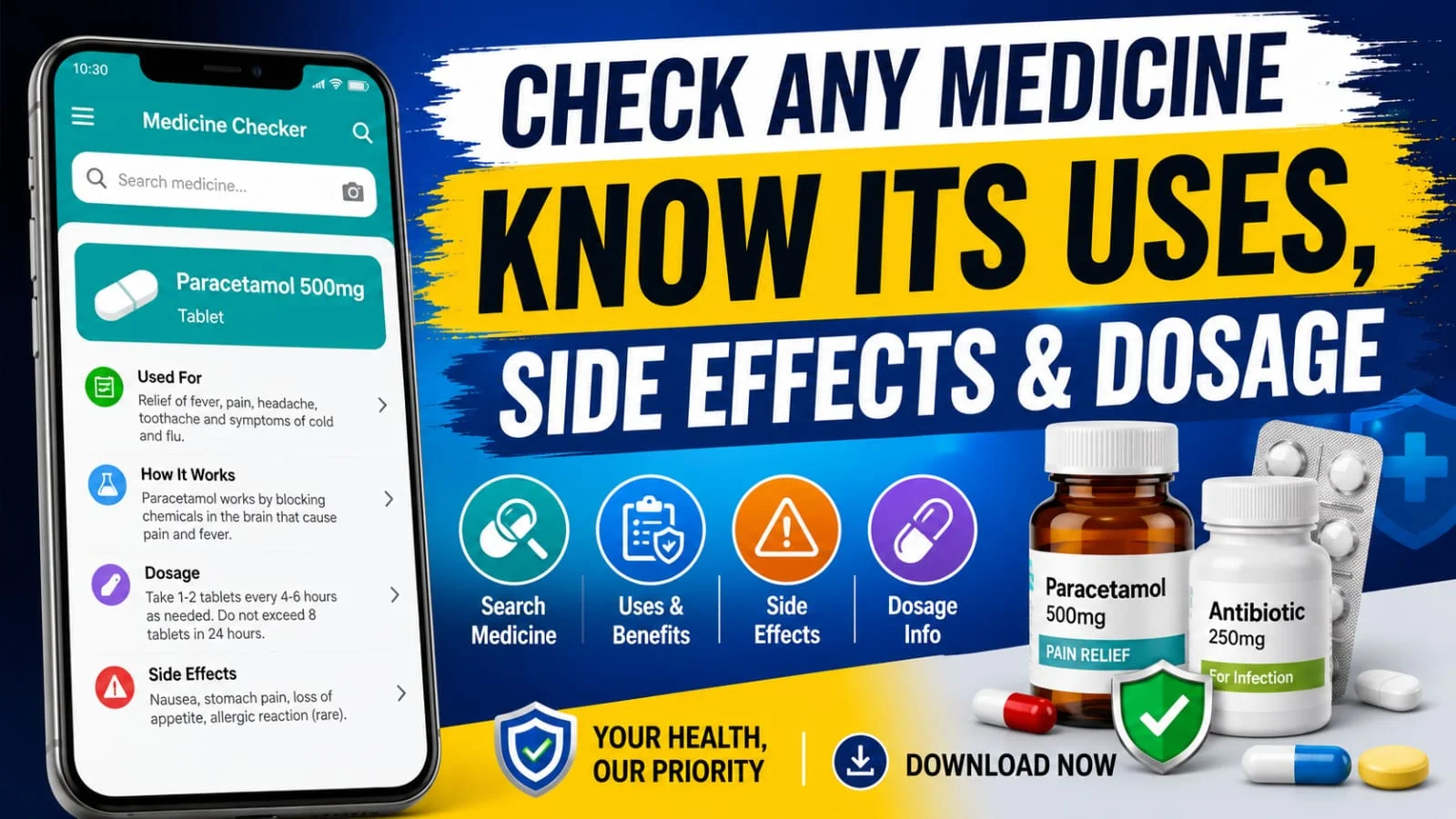
Whether you’ve just been prescribed a new medicine, found unlabeled tablets at home, or simply want to double-check a dosage before taking something, the instinct today is the same: check it online before you take it. The good news is that verifying medicine information online has become genuinely easy — you can check what a medicine is used for, confirm it’s officially registered, and even detect counterfeit products, all from your phone.
This guide covers exactly how to check any medicine online, which apps and official portals to trust, and how to avoid unreliable sources that could give you misleading health information.
Why Checking Medicine Information Online Matters
Medicine mix-ups, counterfeit drugs, and unclear packaging are more common than most people realize. Checking medicine information online helps you:
- Confirm what a medicine is actually used for and its common form (tablet, syrup, injection)
- Verify that a product is officially registered and not counterfeit
- Check for potential interactions with other medicines you’re taking
- Understand basic storage and expiry information before use
- Avoid relying on guesswork, word-of-mouth, or unverified social media advice
Important note before continuing: online tools are excellent for information and verification, but they are not a replacement for professional medical advice. Always consult a licensed doctor or pharmacist before starting, stopping, or combining any medication.
Step-by-Step: How to Check Any Medicine Online
Step 1: Identify the Medicine Correctly
Before searching, get the exact details from the packaging:
- Brand name and generic (chemical) name
- Manufacturer name
- Batch number and expiry date
- Dosage strength (e.g., 500mg)
Having accurate details prevents confusion between similarly named medicines, which is one of the most common sources of dangerous mix-ups.
Step 2: Use an Official Drug Regulatory Database First
Every country has an official drug regulatory authority responsible for approving and registering medicines. This should always be your first stop for verification, not a random blog or forum.
In Pakistan, the <cite index=”8-1″>Drug Regulatory Authority of Pakistan (DRAP) is responsible for ensuring the consistent availability of safe, efficacious, and quality medicines nationwide</cite>. DRAP provides an official Registered Product Data lookup tool where you can <cite index=”9-1″>search for drugs registered with the Registration Board by registration number, brand name, or generic name, with results drawn directly from DRAP’s registration records</cite>. This is the most reliable way to confirm whether a medicine sold in Pakistan is officially registered.
Similar official portals exist in other countries — for example, the FDA’s database in the US, the MHRA in the UK, and the CDSCO in India — and should always be prioritized over third-party sites for verification.
Step 3: Scan the Barcode or QR Code (Where Available)
Many countries now require 2D barcodes or QR codes on medicine packaging specifically to help consumers verify authenticity.
In Pakistan, the official DRAP Barcode Scanner app allows consumers to <cite index=”1-1″>get basic medicine information by scanning the 2D barcode on medicines sold in Pakistan</cite>, pulling data directly from the official Drug Regulatory Information System rather than a third-party estimate.
If your country’s regulator offers a similar scanning tool, it’s generally the fastest and most trustworthy way to confirm a medicine’s authenticity in seconds.
Step 4: Cross-Check With a Reputable Medicine Information Website or App
Once you’ve confirmed a medicine is legitimate, medicine information apps and websites can help you understand usage, common side effects, and general precautions in plain language. Reliable examples include:
- Drugs.com – widely used for drug interaction checks, dosage information, and side effect summaries
- WebMD – offers medicine information alongside general health context
- Medscape – more clinical in tone, often used by healthcare professionals but accessible to general users
- 1mg – popular in South Asia for medicine information, generic alternatives, and pricing
- NHS Medicines A-Z (UK) – government-backed, plain-language medicine guides
These sources are useful for general understanding, but they should supplement — not replace — advice from your own doctor or pharmacist, especially regarding your personal health conditions.
Step 5: Check for Counterfeit or Expired Product Alerts
Counterfeit medicine is a genuine public health concern in many regions. Beyond official government verification tools, some independent platforms have emerged specifically to help consumers check authenticity by scanning a QR code or entering a batch number, cross-referencing the result against regulatory databases. If you use a third-party verification app like this, treat it as a helpful additional layer — the official regulator’s database remains the definitive source of truth.
If a verification check flags a product as unregistered, expired, or suspicious, avoid using it and report it to your local drug regulatory authority rather than the seller.
Best Medicine Information Apps and Tools
Here’s a quick breakdown of the main types of tools you should have on hand:
Official Government Verification Tools
- Your country’s drug regulatory authority website (e.g., DRAP in Pakistan) for confirming registration status
- Official barcode/QR scanning apps where available, since they pull data directly from government databases
General Medicine Information Apps
- Drugs.com, WebMD, or Medscape for usage information, side effects, and interaction checks
- 1mg or similar regional apps for generic alternatives and general medicine details
Prescription and Reminder Apps
- Apps like Medisafe help track dosage schedules and send reminders, which is especially useful for long-term medication plans
Red Flags: How to Spot Unreliable Medicine Information Sources
- No clear source or authorship — legitimate medical information sites credit their content to medical professionals or clearly reference regulatory sources.
- Specific dosage recommendations without a doctor’s involvement — reliable sources provide general information but consistently recommend consulting a healthcare professional for personal dosage decisions.
- Overly confident claims about “miracle cures” or guaranteed results — genuine medical information is typically balanced and includes risks, not just benefits.
- No mention of side effects or interactions — trustworthy sources are transparent about risks, not just benefits.
- Sites pushing you to buy a specific product rather than simply informing you — informational sources should be separate from direct sales pressure.
Frequently Asked Questions
Is it safe to rely only on medicine information apps instead of a doctor? No. These apps and tools are excellent for general information and verification, but they cannot account for your specific health history, other medications, or conditions. Always consult a licensed doctor or pharmacist for personal medical decisions.
How can I tell if a medicine is registered in Pakistan? Use DRAP’s official Registered Product Data lookup tool to search by brand name, generic name, or registration number, or use the official DRAP Barcode Scanner app if the product has a 2D barcode.
What should I do if I suspect a medicine is fake? Stop using it immediately and report it to your country’s official drug regulatory authority. In Pakistan, suspected counterfeit products can be reported directly to DRAP.
Can I check for drug interactions online? Yes, several medicine information sites (such as Drugs.com) offer interaction-checking tools where you can enter multiple medications to see potential interactions — but always confirm anything concerning with a pharmacist or doctor.
Are third-party medicine verification apps as reliable as government databases? Government regulatory databases remain the most authoritative source. Third-party apps can be a useful additional check, especially for barcode scanning convenience, but should not replace official verification when in doubt.
Final Thoughts
Checking medicine information online doesn’t have to mean guessing based on a random search result. Start with your country’s official drug regulatory database to confirm a medicine is genuinely registered, use official barcode-scanning tools where available, and rely on reputable medicine information sites for general context. Most importantly, treat all of this as a support system for informed decisions — not a replacement for the professional advice of a licensed doctor or pharmacist.