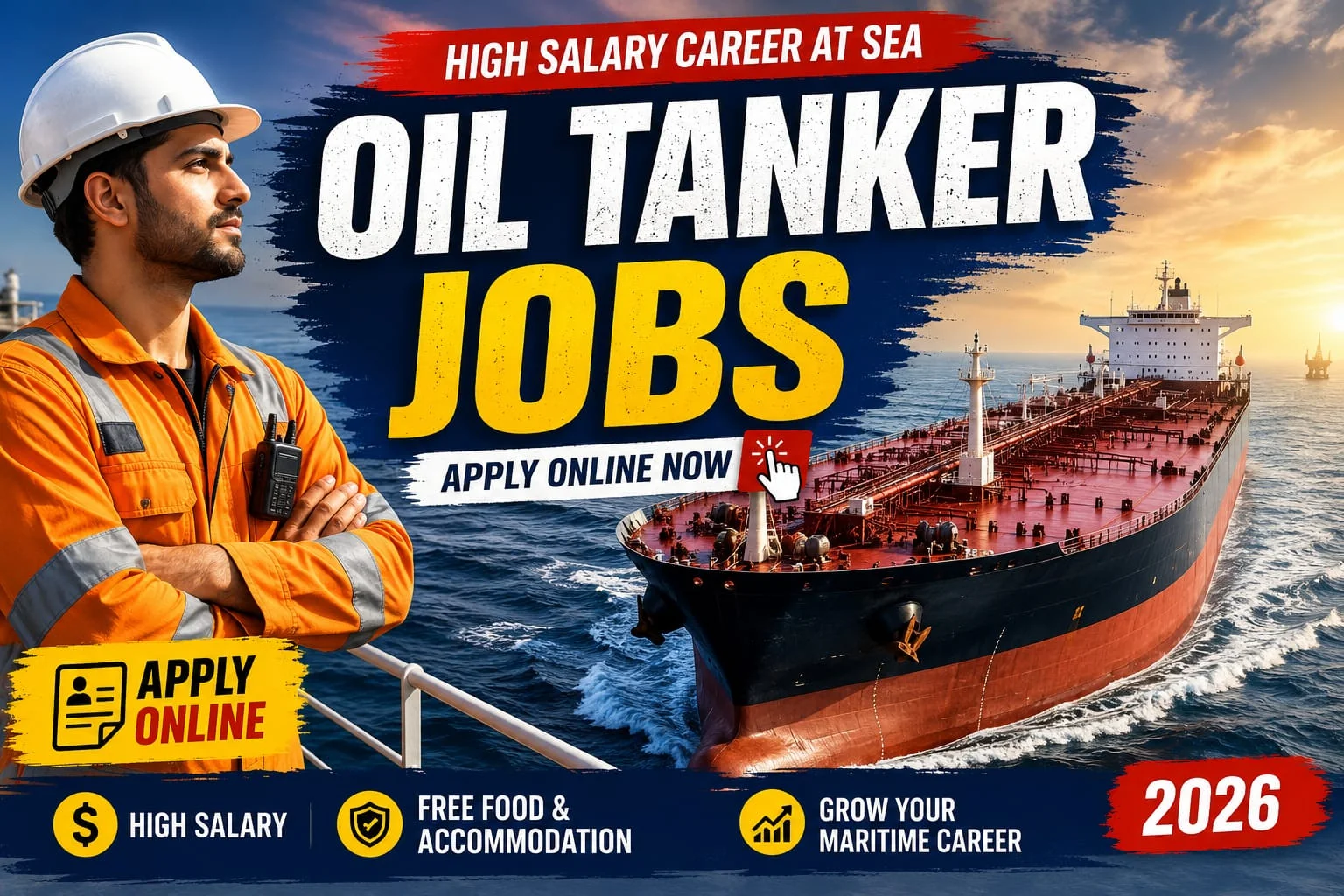
Oil tanker jobs consistently rank among the highest-paying sea careers in the maritime industry, drawing thousands of applicants every year — including many from Pakistan, thanks to a strong national tradition of merchant navy training. But this is also one of the most scam-targeted job categories online, with fake “recruitment agents” preying on job seekers eager for a high-paying overseas position.
This guide explains exactly what oil tanker jobs involve, the real qualifications required, the legitimate path to apply, and — just as importantly — how to avoid the recruitment scams that specifically target people searching for these jobs.
What Are Oil Tanker Jobs?
Oil tankers are specialized cargo ships built to transport crude oil, refined petroleum products, chemicals, or gas across international waters. Working on a tanker involves handling hazardous cargo, which is exactly why crew members on these vessels typically earn more than those on standard cargo or container ships — the pay reflects the additional training, risk, and certification required.
Common roles on oil tankers include:
- Deck Officers (Master, Chief Officer, 2nd Officer, 3rd Officer) — responsible for navigation, cargo operations, and overall vessel safety
- Engineering Officers (Chief Engineer, 2nd Engineer, 3rd/4th Engineer) — responsible for the ship’s engines, machinery, and technical systems
- Ratings/Crew (Able Seaman, Ordinary Seaman, Oiler, Wiper, Pumpman) — support roles handling deck and engine room duties
- Cadets — trainee officers gaining sea time toward their full certification
Why Oil Tanker Jobs Pay More
Several factors push tanker salaries above those of general cargo vessels:
- Hazardous cargo handling requires specialized safety training and carries additional risk, which is compensated accordingly
- Tanker endorsement requirements mean fewer qualified seafarers can legally work these roles compared to general cargo ships, increasing demand for certified crew
- Longer, more technical certification process, which naturally commands a salary premium over entry-level maritime roles
- International demand, since oil and gas transport is a constant global need regardless of broader shipping market fluctuations
Qualifications Required for Oil Tanker Jobs
Unlike many jobs where “apply online” is the first step, maritime careers require specific certifications before you can even be considered for a role. Here’s what’s genuinely required:
1. STCW Certification
The International Convention on Standards of Training, Certification and Watchkeeping for Seafarers (STCW) sets the global baseline for maritime training. Every seafarer, regardless of rank, needs STCW basic safety training covering fire prevention and firefighting, personal survival techniques, personal safety and social responsibility, and elementary first aid.
2. Certificate of Competency (CoC) — For Officers
Deck and engineering officers need a Certificate of Competency confirming their rank and qualification level. In Pakistan, this certificate is issued by the Ministry of Ports & Shipping, following training at recognized institutions such as the Pakistan Marine Academy or other STCW-approved training institutes.
3. Tanker-Specific Endorsements
This is the qualification that specifically opens the door to oil tanker jobs. Depending on the vessel type, seafarers need one or more of the following:
- Basic Oil and Chemical Tanker Cargo Operations Certificate
- Advanced Oil Tanker Cargo Operations Certificate (typically required for officers)
- Dangerous Cargo Endorsement (DCE) for handling hazardous cargo specifically
Without these tanker-specific endorsements, general cargo ship experience alone will not qualify you for most tanker vacancies, even at a senior rank.
4. Seaman Service Book (SSB) and Seafarer’s Identity Document (SID)
In Pakistan, the Government Shipping Office issues the Seaman Service Book, which serves as the continuous official record of a seafarer’s sea service and is a mandatory document for anyone serving aboard a merchant vessel. It’s issued under the Merchant Shipping Ordinance 2001 and is required for crew transit visas and international sea service.
5. GMDSS Certificate (For Deck Officers)
Deck officers additionally need a Global Maritime Distress and Safety System (GMDSS) certificate, which covers ship-to-shore emergency communication protocols.
How to Start a Career Toward Oil Tanker Jobs (For Beginners)
If you’re starting from scratch, here’s the realistic path:
- Complete your basic education requirement (typically intermediate/FSc for cadetship programs, though requirements vary by institute and rank track).
- Apply to a recognized marine training institute, such as the Pakistan Marine Academy in Karachi, or another STCW-approved institution, for officer cadetship or ratings training.
- Complete STCW basic safety training as part of your program.
- Obtain your Seaman Service Book through the Government Shipping Office after completing the required training and documentation.
- Gain sea time through cadetship placements arranged by your training institute or a licensed manning agency.
- Pursue tanker-specific endorsement courses (Basic and Advanced Tanker Operations) once you have foundational sea service, since most tanker roles require this beyond general STCW certification.
- Apply for your Certificate of Competency once you meet the sea time and examination requirements for your target rank.
How Experienced Seafarers Apply for Oil Tanker Jobs
For seafarers who already hold their CoC, SSB, and relevant endorsements, the application process typically involves:
- Registering with a licensed manning/crewing agency authorized to place seafarers with international shipping companies. In Pakistan, legitimate manning agents operate under license from the Ministry of Ports & Shipping.
- Updating your maritime CV with current certificates, sea service record, and specific tanker endorsements clearly listed.
- Applying directly through shipping company career pages where available, in addition to manning agencies, since many major tanker operators post vacancies directly.
- Undergoing a medical fitness examination at an approved maritime medical center, since a valid medical certificate is mandatory before joining any vessel.
- Completing interviews and document verification with the manning agency or shipping company before a contract is issued.
- Signing an official Articles of Agreement (seaman’s contract) that clearly states salary, contract duration, and terms before joining the vessel.
How to Avoid Oil Tanker Job Scams
This is the single most important section for anyone searching “oil tanker jobs apply online,” because this exact search term is heavily targeted by fraudulent recruiters. Protect yourself by watching for these red flags:
- Any agent asking for a large upfront “processing fee,” “visa fee,” or “training fee” before offering a job — legitimate manning agencies do not charge seafarers large fees to be placed on a vessel.
- Vague company names or vessels you cannot independently verify. Always check the shipping company’s name against public vessel registries or their official website.
- Pressure to decide quickly, especially combined with a request for payment or personal documents before any formal contract is issued.
- Unlicensed recruiters. Always confirm a manning agency’s license status with the Ministry of Ports & Shipping before sharing documents or paying any fee.
- Salary offers that seem unrealistically high compared to standard industry rates for the same rank and vessel type.
- Requests to send original certificates or your Seaman Service Book before any formal, written job offer exists.
If in doubt, verify any recruitment offer directly with the shipping company or through an officially licensed manning agent, rather than relying solely on a message, email, or social media post.
Frequently Asked Questions
Can I get an oil tanker job without a marine academy education? Officer positions require formal cadetship training and a Certificate of Competency. However, some rating (crew) positions may be accessible through STCW basic training and relevant endorsements without a full academy program — requirements vary by rank and hiring company.
How long does it take to become qualified for oil tanker jobs? For officer cadets, the full path — including academy training, sea time, and CoC examinations — typically takes several years. Ratings with existing STCW certification can pursue tanker endorsement courses in a shorter timeframe.
Do I need experience on a general cargo ship before working on a tanker? Not necessarily, but many companies prefer candidates with prior sea service, in addition to the required tanker-specific endorsements, especially for officer-level positions.
Is it normal for a recruitment agency to ask for payment? Legitimate manning agencies typically do not charge seafarers large placement fees — earnings should come from your salary once employed, not from paying an agent for access to a job. Be cautious of any agency asking for significant upfront payment.
Where can I verify a manning agency is legitimate in Pakistan? Licensed manning agencies operate under authorization from the Ministry of Ports & Shipping. Always confirm license status directly rather than relying on an agency’s own claims.
Final Thoughts
Oil tanker jobs offer genuinely strong salaries within the maritime industry, but they require real, verifiable qualifications — STCW certification, a Certificate of Competency for officers, tanker-specific endorsements, and a valid Seaman Service Book — not just an online application. Build your qualifications through a recognized marine training institute, work only with licensed manning agencies, and treat any offer requiring upfront payment or unrealistic promises as a serious warning sign rather than an opportunity.